

This is the first in a series that highlights my framework for well-rounded single manhood that I’ve called “The Deliberately Single Man.” Originally published at Medium on February 6, 2022.
A Notable Absence of Men
Over the course of studying single life since 2014, I’ve found one indisputable fact: most of what is written on the topic is by, and for, women. This is especially true when it comes to accounts of the deliberate exploration of single life and its rewards. I’ve read countless articles by women on the wonders of traveling, friendships, solo living, personal growth, and just about every other positive aspect of single life one can imagine. All this begs the question…where are the single men?
A Little History
The nearly 20 year social and economic upheaval of the Great Depression and World War II eventually gave us what to this day is the reference point for the “traditional” roles of men and women. This was an era when the dominant cultural narrative was that men and women need each other, because each provides what the other doesn’t have. Men are strong willed, logical, and able to endure the impersonal world of work. Women are emotionally intelligent, nurturing, and have minds that are best suited for domestic affairs.
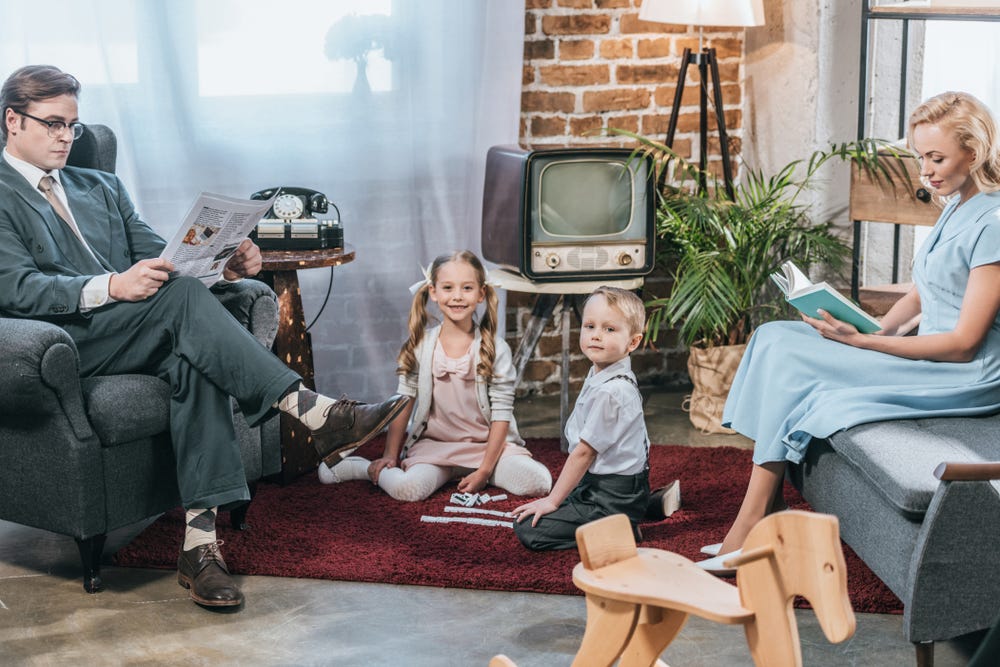
As Stephanie Coontz points out in “Marriage, a History,” this social order began crumbling almost immediately after it was formed as women began demanding more rights. Since that era, women with glee have taken up traditionally masculine roles: making money, focusing on careers, engaging in politics. At the same time, they have maintained the culture’s permission to be emotional beings that value connection with others.
Men, on the other hand, have not been expected to take on or develop traditionally feminine roles over these 50 years. The evidence for this is everywhere. Brene Brown’s research on men and shame found one unequivocal rule: don’t be weak. Other research has shown that for millennials, domestic work still falls to women to a large degree, this despite this generation aspiring to egalitarian relationships. The same goes for what’s regarded as “emotional labor.”
The end result is that to this day, many men are still brought up to be crippled socially and emotionally, and promised they will be made whole by outsourcing large swaths of their functioning to women upon adulthood. Now that women are more empowered than ever to say “no thanks” to this arrangement, the result is often men’s anger, despair, and cynicism about being single.
As a man who is deliberately cultivating single life, this cultural backdrop is inescapable. This has spurred me to create a new narrative. This narrative will explore two broad topics. The first applies to men specifically – the ability to embrace traditionally feminine qualities. The second applies to either gender – having a more expansive, re-defined view of love.
A quick note about what I mean by “deliberately single.” I don’t go on dates with women I barely know. I don’t spend any energy or time on “looking.” The life I live now is not the default state because I have bad luck, nor am I marking time until “something works out.” All engines are at full throttle as I’m building my life, and heart, mind, and intuition are what’s guiding the construction.
Embracing the Feminine - Emotional Literacy
The belief that women are uniquely gifted at understanding and processing emotions looms large to this day. The popular culture is saturated with storylines about how men are unable to deal with or uncomfortable discussing emotions. One need look no further than how often this belief is used to drive plot lines in movies and TV sitcoms. In fact, this belief has taken on such seismic proportions, that it’s often not considered belief or cultural narrative at all, but “human nature.”
Indeed, one of the consequences of the “separate spheres” view of men and women that held sway over post-war life, and that remains stubbornly persistent today, is that it’s on women to hold the “emotional center” of the household. This has allowed the emotional expressiveness of men to decay over the course of decades to two basic responses, as Brene Brown notes: “pissed off or shut down.”
If a single man seeks to have an emotional life beyond these two options, he has to be emotionally literate. He has to be curious, and non-judgmental, about the emotions he has through the course of a day and how thought patterns and events affect those emotions. This familiarity with the catalog of emotions and their triggers is a prerequisite to one of the crowning achievements of emotional literacy: the ability to self-soothe, or doing the work of putting inner guardrails in place to deal with the difficult emotions that are common in day-to-day experience.
The deliberately single man understands that if he ever is in a relationship with another person that requires that person to dim their light or direct a large portion of it toward him, he is in wrong relationship.
The deliberately single man also has to be willing to talk about emotions. This can be a tall order, considering that men are socialized to believe that once adulthood is reached, the only appropriate expression of emotion is in the context of a romantic relationship. But he sees that family members, friends, and colleagues can also share in his emotional life, and that the larger his portfolio of emotional confidantes, the better off he will be.
A note on the confidantes that are friends and colleagues: they can be women. It is my belief that a man and woman can have a deep emotional connection in the context of a platonic relationship. However, potential issues can arise if that woman is romantically partnered or married. This comes in the form of concern on her or her partner’s part of an “emotional affair.” This, in my mind, is a searing indictment of the inherently selfish way we’re taught to look at love. This is not an indictment of individuals, but of the institutional arrangement in which they take part.
There will be much more on love later, but here’s a taste to get the reader warmed up. The deliberately single man sees the emotional prescription of institutionalized love: select one person around whom to build an emotional wall, so the light they’ve been given to shine on the world shines only on you instead, with a few rays to spare for the types of people you aren’t “threatened” by.
The deliberately single man understands that if he ever is in a relationship with another person that requires that person to dim their light or direct a large portion of it toward him, he is in wrong relationship. Note that specific turn of phrase. Not a wrong relationship, where the cast of characters might change now and then but the underlying structure remains the same, but wrong relationship. Wrong relationship occurs when you explicitly or subtly require a person to be less than their full potential to the world for your own emotional comfort and safety.
The deliberately single man seeks right relationship, whereby he doesn’t seek to turn another’s light onto himself, but instead wishes to step in the direction of the light they are already shining, and hold them up so that others may benefit even more.
Brilliant! I like your writing style so much, and your content is spot-on for how I've deliberately decided to live my life. I look forward to reading the next few parts of this series. I thank you sincerely for sharing your gifts.
I’m so glad you have started writing again! Such a wholesome outlook of both people in a relationship, shining their light outward so many others can benefit. A beautiful and unselfish way of thinking!
Shirley M