

Originally published at Medium on April 2, 2022.
I’m a 90’s kid, born at the leading edge of the Millennial generation. I remember vividly adult voices in the media and in the community lamenting the promiscuity of young people and the way “the MTV” encouraged such behavior. Young people are having sex, I was led to believe, because they are depressed, anxious, listless, and have low self-esteem driven by the media they’re consuming.
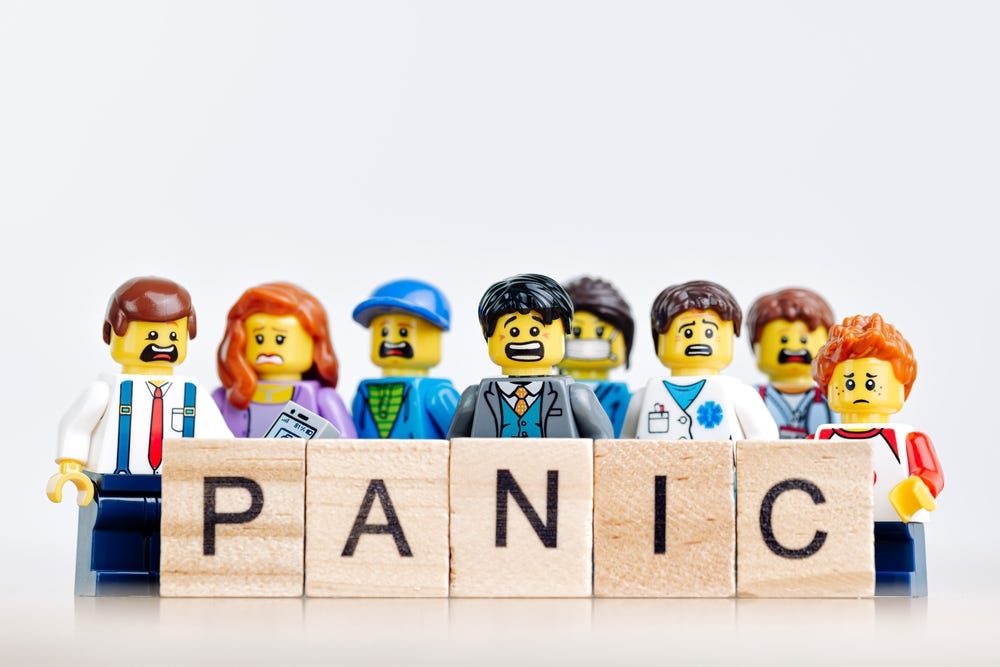
Enter the year 2022. There is now a raft of data showing how throughout the 21st century, but especially over the last 15 years or so, sexual activity has declined among nearly everyone – men and women, singles and couples, young and old, in places all around the world. The biggest declines, at least in the United States, have been registered among young people.
Any researcher or journalist reporting on this research who is honest will tell you that we just don’t have the studies yet to illuminate all the reasons why this is happening and what it all means, good or bad. But that hasn’t stopped some talking heads from claiming that young people aren’t having sex because they are depressed, anxious, listless, and have low self-esteem driven by the media they’re consuming.
If you’ll allow me one pun: what the actual fuck?
The logic-bending nature of the same set of circumstances being blamed for polar opposite sexual behavior among young people living just 30 years apart is a sign to me that we’re in the midst of yet another good ole’ fashioned American Sex Panic. You know, the type of panic where you read an article online or see a commentator on cable news that leaves you with the sense that the sexual choices of a critical mass of the populace might lead to the collapse of civilization.
The pernicious thing about these panics is the way they give cover to bad behavior and the way that the crusading moralizers of the day run roughshod over the rights of anyone in their path in order to restore “normality.” A panic over a lack of sex is no different in the fact that it has real-world consequences:
People still lack critical information and support. There is an appalling lack of equal access to sexual education and reproductive healthcare resources in the U.S. Depending on where you live, sex education may be non-existent. If it’s mandated by law, it may not have to be medically accurate. If you live in a state that has banished as many reproductive care options as possible and you can’t afford to travel hundreds of miles, you’re stuck. Handwringing over clickbait agendas like “too much” or “too little” sex changes none of this.
You can stare a good thing right in the face and still not see it. One of the interesting things about the decline in sexual activity among young people is that there has been a concurrent decline in alcohol use. I’ve read some who speculate the two are connected, as basically, “back in my day,” most young people couldn’t have sex without first being drunk.
Yet, these comments seem to land not with a sense of triumph, but an air of resignation, often because not having sex or drinking alcohol are listed as two ways in which today’s young people are “delayed.” I don’t know, maybe they just don’t want to fuck up their lives for no apparent reason and they see some of the bizarre markers of adulthood held by their elders for what they are?
It keeps women in their place and gives cover to raging male malcontents. Women in the U.S. won the right to vote with the ratification of the 19th Amendment to the Constitution in 1920 after decades of struggle. The Equal Credit Opportunity Act, allowing women to obtain credit cards independent of their husbands, passed in 1974. It only became illegal in all 50 states for a husband to rape his wife in 1993. Yes, that 1993, the one that was only 29 years ago.
We tend to think of our rights as eternal and unchanging, but that couldn’t be further from the truth. When looked at through a historical lens, many of the rights women have in the U.S. literally just happened. And as we’ve done with racism, so we’ve done with misogyny. After we outlaw the worst practices, we pretend that the underlying beliefs and attitudes that led to those practices will somehow resolve themselves of their own accord, point to women in positions of power today, and declare ourselves cleansed of the ugliness of the past.
What’s easy to see, though, is that those beliefs and attitudes don’t just go away – they mutate into different forms and put themselves on full display when political and social conditions allow it. And politically, conditions across the western world over the last several years have allowed it – the rallying cry of “traditional values” has echoed across right wing populist governments in Hungary, Poland, and the U.S., among other places.
Women enjoying the ability to live and prosper independently of men is not part of these traditional values, and even large parts of the political center seem reluctant to challenge this notion. Propose transformative legislation to put women on par with men, and many in the center, while expressing support in principle, will still fear going “too far” and likely vote for whoever wants to uphold the status quo.
We tend to think of our rights as eternal and unchanging, but that couldn’t be further from the truth. When looked at through a historical lens, many of the rights women have in the U.S. literally just happened.
Drop an incendiary like a sex panic into this smoldering fire, and the flames kick up again with the idea that the real reason sex isn’t what it’s supposed to be is because of all these self-determining, educated, money-making single women. Most people these days won’t say that directly, but the unspoken step-by-step logic is familiar to us all: sexual activity is in decline, because marriage and couples are in decline, because women no longer need men. There is not enough time in the day to list all the subtle signals we get from our culture that a laundry list of social ills can be attributed to “women no longer need men.”
Unfortunately, all this provides aid and comfort to the incels and other raging male malcontents out in the world. A protracted panic about a decline in sexual activity among the mainstream of society further reinforces for them the idea that their birthright, which from what I can tell entails controlling a woman’s life, has been stolen from them.
These panics have power. The power to distract us from investigating substantive issues around people’s rights. The power to goad us into keeping the status quo out of fear of change. The power to keep women in their place and contained by male rage. The next time you see the “alarm raised” about lower levels of sexual activity, ask yourself: what do people want me to believe about this data, and what agenda might they have? And consider saving your alarm for much more worthy issues.